

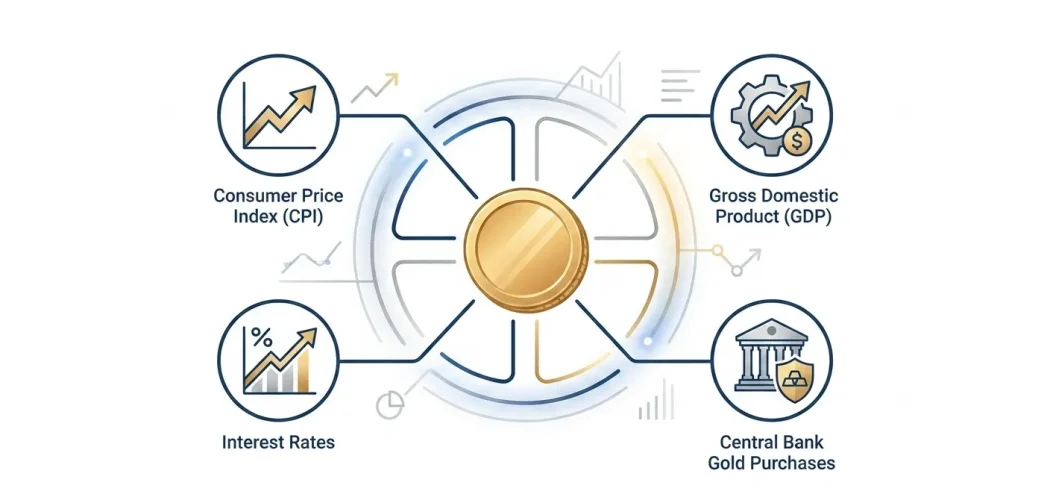
For many retail investors, the world of economic indicators can feel like a complex maze of acronyms and numbers. However, understanding a few key economic indicators gold investors should track can significantly enhance your ability to make confident investment choices. These indicators offer insights into the health of the economy, inflation trends, and overall market sentiment—all crucial factors influencing gold’s appeal. By paying attention to these signals, you can better anticipate market shifts and position your portfolio effectively.
The Inflation Compass: Consumer Price Index (CPI) and Producer Price Index (PPI)
Inflation is arguably the most critical factor for gold investors. Gold has historically been a robust hedge against rising prices, as evidenced by its performance outpacing the CPI over the last five decades. The period between 2025 and 2026 saw gold maintaining this reputation amidst economic uncertainty, providing a reliable store of value when purchasing power erodes. Moreover, understanding how these inflation measures work is fundamental for any precious metals investor.
- Consumer Price Index (CPI): This measures the average change over time in the prices paid by urban consumers for a market basket of consumer goods and services. A rising CPI signals inflation, often increasing gold’s attractiveness. In fact, when everyday costs climb, people often turn to tangible assets.
- Producer Price Index (PPI): This measures the average change over time in the selling prices received by domestic producers for their output. PPI can be a leading indicator for CPI, as increases in producer costs often get passed on to consumers. Therefore, tracking the PPI can provide an early warning sign of impending consumer inflation.
When these indicators show persistent inflation, it often strengthens the case for holding gold in your portfolio. Consequently, many investors consider gold a vital component during inflationary periods. For more detailed insights into market movements, consider exploring our Market Guides.
The Interest Rate Barometer: Federal Funds Rate and Real Interest Rates
Interest rates have a significant inverse relationship with gold. Gold doesn’t pay interest, so when interest rates rise, other interest-bearing assets become more attractive, potentially drawing money away from gold. Conversely, when rates are low, the opportunity cost of holding non-yielding gold decreases, making it more appealing. It’s a fundamental principle to grasp when evaluating investment opportunities.
- Federal Funds Rate: This is the target interest rate set by the Federal Reserve. Changes here influence borrowing costs across the economy. Higher rates generally make gold less appealing. For example, when the Fed raises rates, bonds and savings accounts offer better returns.
- Real Interest Rates: This is the nominal interest rate minus the inflation rate. When real interest rates are low or negative (meaning inflation is higher than the interest you earn), the opportunity cost of holding gold decreases, making it more appealing. This scenario often drives gold demand, as investors seek assets that can preserve wealth.
Understanding the interplay between these rates and gold prices is crucial for making informed decisions. Many investors closely monitor the Federal Reserve’s announcements for clues about future rate changes. Furthermore, the direction of real interest rates can often predict gold’s short-term movements.
Economic Growth Signals: GDP and Employment Data
While not directly tied to gold as a safe-haven asset, robust economic growth can influence investor sentiment and, indirectly, gold prices. A strong economy typically means less uncertainty, which can reduce the immediate demand for traditional safe havens. However, rapid growth can also bring about inflationary pressures, which, as we’ve discussed, can boost gold’s appeal.
- Gross Domestic Product (GDP): This is the total value of goods and services produced in a country. Strong GDP growth often suggests a healthy economy, which might reduce the immediate need for safe-haven assets like gold. Nevertheless, if growth is accompanied by concerns about overheating or inflation, gold can still find support.
- Employment Data (e.g., Non-Farm Payrolls, Unemployment Rate): Strong job growth and low unemployment typically signal a healthy economy. Like GDP, this can sometimes reduce the urgency for safe-haven assets. However, unexpected downturns in employment can quickly shift sentiment towards gold.
These macroeconomic indicators provide a broader picture of economic health. Investors often watch these reports closely for signs of economic strength or weakness. Ultimately, the market’s interpretation of these figures dictates their impact on gold. It is important to remember that strong employment figures can also lead to wage inflation, further supporting gold’s role.
The U.S. Dollar Index (DXY): Gold’s Counterpart
The U.S. Dollar Index (DXY) measures the value of the U.S. dollar against a basket of six major foreign currencies. Given that gold is typically priced in U.S. dollars, there’s generally an inverse relationship between the two. When the dollar strengthens, gold becomes more expensive for holders of other currencies, which can dampen demand. Conversely, a weaker dollar makes gold more affordable and often increases its appeal.
This inverse correlation is a fundamental concept for anyone investing in precious metals. Therefore, tracking the DXY is just as important as monitoring inflation or interest rates. A sustained downtrend in the dollar can be a significant bullish signal for gold. Conversely, a strong dollar can create headwinds. Observing this relationship helps investors gauge the relative value of gold. These are important economic indicators gold investors should consider.
Geopolitical Stability and Market Sentiment
Beyond the numbers, geopolitical events and overall market sentiment play a crucial role in gold’s performance. Gold is often seen as a safe haven during times of political instability, military conflicts, or major economic crises. When uncertainty rises, investors tend to flock to gold as a store of value, driving up its price.
For instance, major global events can trigger a flight to safety, irrespective of prevailing economic data. This emotional component of the market can sometimes override fundamental analysis. Therefore, staying informed about global news and political developments is essential. Market sentiment, while harder to quantify than economic data, is undoubtedly one of the critical economic indicators gold responds to. It is important to note that fear and uncertainty can be powerful drivers of demand for precious metals.
Understanding Central Bank Policies and Gold Reserves
Central banks around the world are major holders of gold, and their policies significantly impact the gold market. When central banks increase their gold reserves, it signals confidence in gold as a long-term asset and can boost demand. Conversely, selling off reserves can put downward pressure on prices. Their actions are often a reflection of their outlook on global economic stability and currency strength.
Furthermore, central bank monetary policies, such as quantitative easing or tightening, directly influence inflation and interest rates, which, as we’ve discussed, are key drivers for gold. For example, a central bank’s decision to cut interest rates can make gold more attractive. Investors should pay close attention to statements and actions from institutions like the Federal Reserve, the European Central Bank, and the Bank of England. These are critical economic indicators gold investors must monitor.
Debt Levels: National Debt and Corporate Debt
Rising national debt levels can sometimes signal potential future inflation, as governments might resort to printing more money to service their obligations. This scenario typically makes gold more appealing as a hedge against currency debasement. Similarly, high corporate debt, especially during economic downturns, can lead to financial instability, prompting a flight to safe-haven assets.
When governments or corporations face significant debt burdens, it can create a sense of unease in the financial markets. This uncertainty often translates into increased demand for gold. Therefore, monitoring debt trends is another important aspect of understanding the broader economic landscape and its potential impact on gold. These are important economic indicators gold investors should be aware of. You can find more information on various investment topics in our News section.
Commodity Prices Beyond Gold
While gold is a commodity itself, the prices of other major commodities, especially crude oil and industrial metals, can offer insights into global economic activity and inflationary pressures. Rising commodity prices often indicate strong demand and potential inflation, which can indirectly support gold prices. For example, if oil prices surge, it feeds into the cost of goods and services, contributing to overall inflation.
Conversely, a sharp decline in commodity prices might signal a slowdown in global growth, which could either dampen inflation concerns (negative for gold) or increase safe-haven demand if the slowdown leads to broader market instability (positive for gold). Therefore, tracking a broader basket of commodities can provide a more comprehensive view of the economic environment. For instance, you can learn more about related markets in our Complete Guide to Crude Oil Trading.
The Importance of Investor Confidence and Sentiment Surveys
Investor confidence and sentiment surveys, such as the Consumer Confidence Index or purchasing managers’ indices (PMIs), provide qualitative insights into the economic outlook. High confidence generally suggests a healthy economy and strong consumer spending, potentially reducing the need for safe havens. Conversely, declining confidence can signal upcoming economic challenges, which often drives investors towards gold.
These surveys capture the mood of businesses and consumers, offering a forward-looking perspective that quantitative data might not immediately reveal. While not strictly quantitative economic indicators gold responds to, they are nonetheless crucial for understanding the prevailing market psychology. Paying attention to these sentiment gauges helps in anticipating shifts in investor behavior. After all, market psychology often dictates short-term price movements.
Understanding Currency Fluctuations
Beyond the U.S. Dollar Index, broader currency fluctuations against other major global currencies can also impact gold. A general weakening of fiat currencies globally can enhance gold’s appeal as a superior store of value. This is because gold is a universal currency, not tied to the economic policies of any single nation. When investors lose faith in paper money, they often turn to physical assets.
Monitoring currency markets provides another layer of understanding for gold investors. Significant depreciation in major currencies can signal underlying economic instability, making gold a more attractive alternative. Therefore, a global perspective on currency strength is beneficial. This is another one of the key economic indicators gold investors should monitor regularly. In fact, a diversified approach to understanding global finance is always recommended.
The Yield Curve: A Forward-Looking Indicator
The yield curve, which plots the yields of bonds with different maturities, is often considered a leading economic indicator. An inverted yield curve, where short-term bond yields are higher than long-term yields, has historically preceded economic recessions. During such periods of economic uncertainty and potential downturns, gold typically performs well as a safe-haven asset.
Conversely, a steepening yield curve (long-term yields rising faster than short-term yields) often signals expectations of stronger economic growth and potentially higher inflation, which can have mixed implications for gold depending on the specific context. Understanding the yield curve’s shape provides valuable foresight into economic health, making it a powerful tool for gold investors. This makes it one of the more sophisticated economic indicators gold investors can track.
Conclusion: Navigating the Market with Confidence
Successfully navigating the gold market doesn’t require you to become an economist, but it does mean paying attention to a select set of influential economic indicators gold responds to. By understanding the Consumer Price Index, interest rates, GDP, the U.S. Dollar Index, and broader market sentiment, you equip yourself with the knowledge to make more informed and confident investment decisions.
Remember, gold’s role in a portfolio is often to act as a hedge against inflation and economic uncertainty, providing stability when other assets falter. Keep these indicators on your radar, stay informed, and approach your gold investments with a clear, strategic mindset. This balanced approach will help you weather market fluctuations and potentially enhance your portfolio’s long-term performance. For any further questions, please visit our FAQ page.
FAQ
What are the most crucial economic signals for gold?
The most crucial economic signals for gold investors are inflation indicators like the Consumer Price Index (CPI) and Producer Price Index (PPI), along with interest rates, particularly real interest rates. These directly affect gold’s attractiveness as a store of value.
How do interest rates influence gold prices?
Interest rates generally have an inverse relationship with gold prices. When interest rates rise, interest-bearing assets become more appealing, potentially drawing investment away from non-yielding gold. Conversely, low or negative real interest rates tend to make gold more attractive.
Why is the U.S. Dollar Index important for gold investing?
The U.S. Dollar Index (DXY) is important because gold is typically priced in U.S. dollars. A stronger dollar makes gold more expensive for international buyers, potentially reducing demand, while a weaker dollar makes it more affordable and can boost demand.
Can economic growth impact the value of gold?
Yes, economic growth can impact the value of gold indirectly. Strong growth might reduce the immediate need for safe-haven assets, but rapid growth can also lead to inflation, which often increases gold’s appeal. It’s a nuanced relationship influenced by many factors.
What role do central banks play in the gold market?
Central banks play a significant role as major holders of gold and through their monetary policies. Their decisions on interest rates, quantitative easing, and changes in gold reserves can directly influence market sentiment and gold prices.