

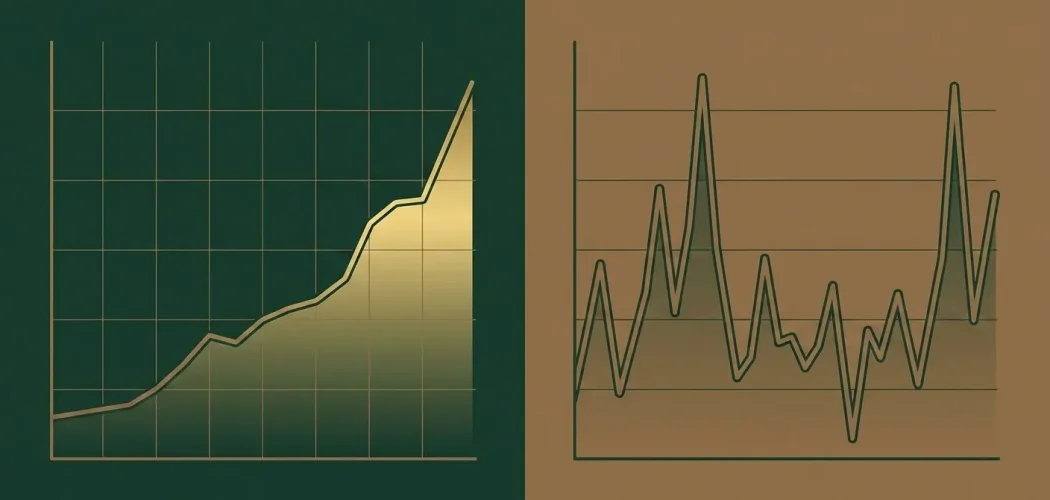
In an era marked by economic uncertainty, rising global debt, and persistent inflation, the quest to protect hard-earned savings is paramount for everyday investors like Savvy Sarah. Amidst this landscape, understanding gold inflation hedge performance becomes not just an academic exercise, but a practical necessity. The period between 2025 and 2026 offered a dramatic illustration of gold’s unique role, with prices surging over 60% in 2025 and surpassing $5,000 per ounce, reinforcing its historical reputation as a crucial hedge against inflation.
Gold Inflation Hedge Performance: A Historical Perspective
Gold has a track record spanning over five decades of consistently outperforming the Consumer Price Index (CPI). This isn’t a coincidence; it’s a fundamental characteristic of gold as a tangible asset that tends to retain its value when fiat currencies lose purchasing power. When the cost of living rises, gold often appreciates, acting as a crucial buffer for your wealth. This resilience is what makes gold an attractive component for long-term financial planning, particularly for those new to investing.
The 2025-2026 Surge and Beyond
The recent past has provided compelling evidence of gold’s anti-inflation properties. In 2025, gold prices saw a remarkable rally, continuing into early 2026 to reach an all-time high of $5,602.23 per ounce on January 29, 2026. This surge was driven, in part, by increased retail investor participation and a global search for safe havens. While the market experienced a sharp correction shortly after these peaks, settling around $4,102 per ounce by July 2026, the initial rally powerfully demonstrated gold’s potential to protect and even grow wealth during inflationary periods. This volatility, though attention-grabbing, doesn’t diminish gold’s long-term role as inflation protection; rather, it underscores the importance of a long-term perspective.
Why Gold Shines During Uncertainty
Gold’s appeal extends beyond just inflation. It acts as a store of value amidst broader economic uncertainty, geopolitical fragmentation, and the ever-growing specter of rising global debt. These factors collectively create an environment where traditional assets might struggle, but gold often thrives. It offers a sense of stability when the future feels unpredictable, a quality highly valued by investors seeking peace of mind.
Central Banks Lead the Way
It’s not just individual investors recognizing gold’s hedge against rising prices; central banks are significantly increasing their gold holdings. In Q2 2026, a record 289 tonnes of gold were purchased by central banks globally, representing a substantial 62% increase over Q2 2025. Furthermore, a 2025 survey indicated that a staggering 95% of central banks anticipate global gold reserves to increase in 2026. This institutional endorsement speaks volumes about gold’s perceived long-term value and its role in national wealth preservation strategies.
Beyond the Hype: Long-Term Value and Gold for Financial Resilience
For new investors, it’s easy to get caught up in the short-term price movements. However, the true strength of gold inflation hedge performance lies in its consistent ability to preserve wealth over the long haul. Instead of viewing gold as a speculative asset, consider it a foundational element of a balanced portfolio. Its gold vs. inflation data consistently shows its ability to act as a counterweight to economic pressures, providing stability when other investments might be under strain.
As you build your financial future, incorporating gold can be a powerful step towards achieving greater security. It empowers you to face economic challenges with confidence, knowing you have a tangible asset that has historically stood the test of time. For Savvy Sarah, this means a clearer path to protecting her savings and building a robust financial foundation.