

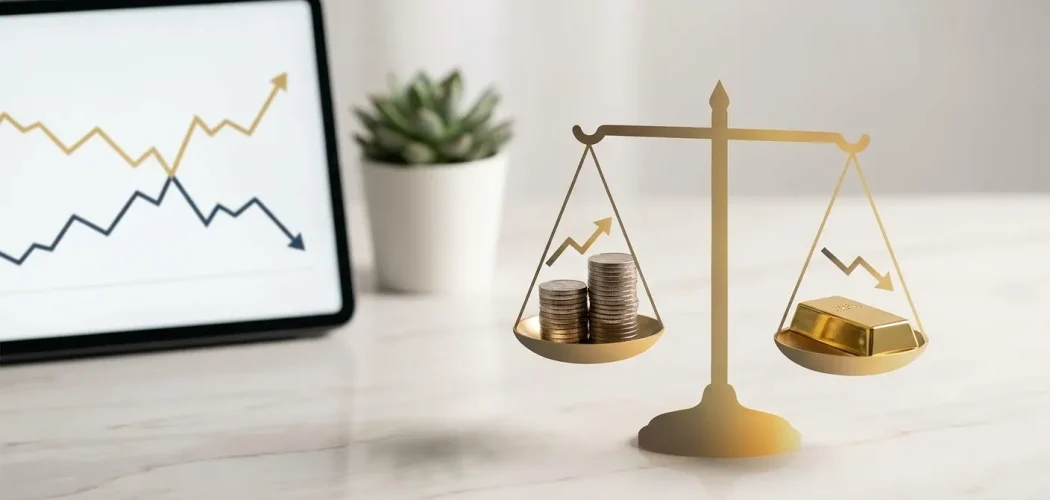
Understanding how Interest Rates Impact Gold is fundamental for any investor looking to navigate the precious metals market. Gold, unlike bonds or bank deposits, does not offer interest or dividends. This characteristic creates a critical dynamic with interest rates, particularly those set by central banks like the Federal Reserve. For new investors, grasping this connection is a key step towards smart wealth protection.
Many factors influence the price of gold, but the relationship with interest rates is often among the most significant. This guide will clarify how these economic forces interact, making complex concepts accessible for everyone. We aim to provide clear, practical insights, empowering you to better understand gold’s role in your portfolio.
The Inverse Relationship: How Interest Rates Impact Gold
Typically, when interest rates rise, the appeal of holding non-yielding assets like gold tends to diminish. Higher interest rates make fixed-income investments, such as government bonds or savings accounts, more attractive as they offer a better return on investment. Consequently, the opportunity cost of holding gold increases. This can lead investors to shift capital away from the precious metal and into interest-bearing assets, thereby putting downward pressure on gold prices.
Conversely, when interest rates are low or falling, the opportunity cost of holding gold decreases. This makes it a more appealing store of value compared to low-yielding alternatives. As a result, this often leads to increased demand and upward pressure on gold prices. Therefore, keeping an eye on central bank announcements is crucial for understanding potential shifts in gold’s valuation.
Nominal vs. Real Interest Rates: What’s the Difference?
It’s important to distinguish between nominal interest rates and real interest rates. Nominal interest rates are the stated rates you see on loans or savings accounts. They are the raw percentage return before considering inflation. For example, if a savings account offers a 2% annual interest rate, that’s the nominal rate.
Real interest rates, however, tell a more accurate story about your purchasing power. They are calculated by subtracting the inflation rate from the nominal interest rate. If your savings account offers 2% (nominal) but inflation is 3%, your real interest rate is -1%. This means your money is actually losing purchasing power over time. Understanding this distinction is vital for any investor, especially when considering assets like gold, which don’t pay interest.
Real Interest Rates: The True Driver of Gold Prices
While nominal interest rates are important, it’s real interest rates (nominal rates minus inflation) that truly Interest Rates Impact Gold prices. When real interest rates are low or negative, gold’s appeal as an inflation hedge and a store of value strengthens significantly. In an environment where inflation is high and interest rates aren’t keeping pace, the purchasing power of traditional currencies erodes, making gold a more attractive asset.
This is why gold often performs well during periods of economic uncertainty coupled with accommodative monetary policies that keep real rates suppressed. Investors should pay close attention to inflation data and central bank policy statements to anticipate shifts in real interest rates and their potential effect on gold’s value. For a deeper look at market dynamics, you might find our COT Gold, Silver & USDX Report insightful.
The Role of Central Banks and Monetary Policy
Central banks, such as the Federal Reserve in the United States or the European Central Bank, play a pivotal role in setting interest rates. Their decisions on monetary policy directly influence the economic environment. When central banks raise interest rates, they typically aim to cool down an overheating economy and combat inflation. This can make interest-bearing assets more appealing, potentially reducing demand for gold.
Conversely, when central banks lower interest rates or implement quantitative easing, they are often trying to stimulate economic growth. This can lead to lower real rates and a weaker currency, both of which generally support higher gold prices. Investors closely monitor central bank meetings and statements for clues about future policy directions. These actions directly influence how prevailing interest rates affect gold’s value.
Historical Context: Interest Rates and Gold Performance
Looking at historical data can provide valuable insights into how interest rate movements have affected gold prices over time. During periods of high inflation and low real interest rates in the 1970s, gold experienced significant price appreciation. This demonstrated its effectiveness as a hedge against currency debasement.
More recently, after the 2008 financial crisis, central banks around the world slashed interest rates to near zero and engaged in extensive quantitative easing. This era of ultra-low real rates saw gold prices reach new highs, further illustrating the inverse relationship. Understanding these historical patterns helps investors anticipate how future interest rate changes might influence gold’s trajectory. It highlights why many see gold as a crucial part of smart wealth protection.
Understanding Inflation Expectations
Beyond current interest rates, inflation expectations also play a crucial role. If investors anticipate higher inflation in the future, they might turn to gold as a hedge, even if current real interest rates are not significantly negative. This is because gold has historically maintained its purchasing power during inflationary periods. Therefore, market sentiment regarding future inflation can influence gold prices as much as, if not more than, current economic data.
The market’s perception of inflation directly impacts the attractiveness of gold. When people expect prices to rise significantly, they tend to move their capital into assets that are perceived to hold value. Gold is a classic example of such an asset. This is another way that inflation expectations can influence how interest rates impact gold, creating a complex but understandable dynamic for investors.
The US Dollar and Its Connection to Interest Rates and Gold
The US dollar’s strength or weakness also plays a significant role in gold pricing, and it is intrinsically linked to interest rates. Gold is typically priced in US dollars. Consequently, a stronger dollar makes gold more expensive for holders of other currencies, potentially dampening demand. A weaker dollar, however, makes gold cheaper, often increasing demand.
Interest rate differentials between the US and other major economies can influence the dollar’s value. When US interest rates are higher relative to other countries, it can attract foreign investment, strengthening the dollar. This, in turn, can put downward pressure on gold prices. Conversely, lower US rates can weaken the dollar, which generally supports higher gold prices. Therefore, the interplay between interest rates, the dollar, and gold is a three-way dynamic that investors must monitor. You can see this dynamic explored further in analyses like Gold and Silver Surge as the Debasement Trade Returns.
Global Economic Conditions and Investor Sentiment
Beyond domestic interest rates, broader global economic conditions and investor sentiment significantly influence gold prices. During times of global uncertainty, geopolitical tensions, or financial instability, gold often acts as a safe-haven asset. Investors flock to gold to protect their capital, irrespective of interest rate environments. This safe-haven demand can temporarily override the typical inverse relationship between interest rates and gold prices.
For instance, if there’s a major global crisis, even if interest rates are high, the demand for gold as a sanctuary could push its price up. This highlights that while interest rates are a crucial factor, they are not the only one. Understanding these broader market forces helps investors make more robust decisions. The question of how interest rates impact gold becomes part of a larger economic puzzle.
Investment Strategies in a Changing Rate Environment
For retail investors, understanding how interest rates impact gold is key to developing effective strategies. When interest rates are rising, it might be a time to reassess your gold allocation. However, remember that gold also serves as a long-term hedge against inflation and economic instability. Therefore, a complete divestment might not be prudent.
During periods of falling or low interest rates, gold’s attractiveness increases. This could be an opportune time to consider increasing your exposure to gold, especially if inflation expectations are also rising. Always consider your personal financial goals and risk tolerance. Diversifying your portfolio remains a cornerstone of sound investment practice. For new investors, learning about why gold might be underinvested can be very helpful.
The Importance of a Balanced Portfolio
While we focus on how interest rates impact gold, it’s crucial to remember that gold is just one component of a well-diversified portfolio. A balanced approach typically includes a mix of stocks, bonds, and alternative assets like precious metals. This diversification helps mitigate risk and can provide stability during various economic cycles.
Gold often moves independently of other asset classes, offering a valuable hedge. This means that even when other investments are struggling due to rising interest rates, gold might perform well. Therefore, understanding the relationship between interest rates and gold helps you optimize its role within your broader investment strategy. For further reading on economic indicators, consider resources like the Federal Reserve’s FOMC calendar for policy announcements.
Future Outlook: What to Watch For
Looking ahead, investors should continue to monitor key economic indicators and central bank communications. Pay attention to inflation reports, unemployment figures, and GDP growth. These data points often influence central bank decisions on interest rates. Furthermore, geopolitical developments can swiftly change market sentiment and affect gold prices.
The global economic landscape is constantly evolving, making it essential to stay informed. While the general principle that interest rates impact gold holds true, the nuances of real rates, inflation expectations, and global events add layers of complexity. Staying educated and adaptable will serve you well in navigating the gold market. For comprehensive market insights, reliable sources like the World Gold Council provide valuable data.
In essence, the interplay between interest rates, inflation, and investor sentiment shapes gold’s price trajectory. Keeping an eye on these economic indicators provides valuable insights for both new and experienced gold investors. Understanding how interest rates impact gold is a powerful tool for making informed decisions and protecting your wealth.
Conclusion: Navigating Gold with Confidence
The relationship between interest rates and gold is a cornerstone of precious metals investing. While gold does not yield interest, its value is profoundly affected by the opportunity cost presented by interest-bearing assets. Real interest rates, which account for inflation, are particularly influential, strengthening gold’s appeal when they are low or negative.
By understanding this dynamic, alongside the roles of central banks, the US dollar, and global sentiment, investors can gain a clearer perspective on gold’s price movements. This knowledge empowers you to make informed decisions, whether you are new to gold investing or looking to refine your strategy. Gold Price Trader is committed to providing straightforward, practical guidance to help you confidently navigate the gold market and secure your financial future.
Frequently Asked Questions About Gold and Interest Rates
How do rising interest rates affect gold’s appeal?
Rising interest rates generally make interest-bearing assets like bonds more attractive. This increases the opportunity cost of holding gold, which doesn’t offer interest or dividends, potentially reducing its appeal and putting downward pressure on its price.
What are real interest rates, and why are they important for gold?
Real interest rates are nominal interest rates minus inflation. They are crucial because they reflect the true return on an investment. When real rates are low or negative, gold becomes more appealing as an inflation hedge, as traditional currency loses purchasing power.
Does a strong US dollar impact gold prices, and how does this relate to interest rates?
Yes, a strong US dollar typically makes gold more expensive for international buyers, potentially reducing demand. US interest rate changes can influence the dollar’s strength; higher US rates often strengthen the dollar, which can indirectly affect gold’s price.
Is gold always a good investment when interest rates are low?
While low interest rates generally support higher gold prices by reducing the opportunity cost, gold’s performance also depends on other factors like inflation expectations, geopolitical stability, and overall investor sentiment. It’s one key factor among many.
How can new investors use this information to make better decisions?
New investors should monitor central bank policies, inflation data, and real interest rate trends. Understanding these relationships helps in anticipating gold’s potential movements and integrating it thoughtfully into a diversified portfolio for long-term wealth protection.