

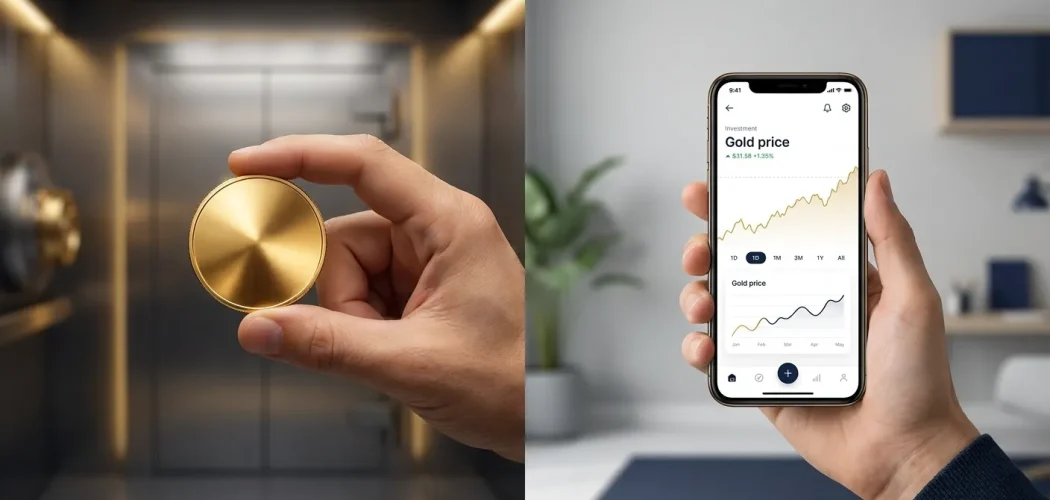
# Physical Gold vs Digital: Which is Right for Your Portfolio?
As a new investor like Savvy Sarah, navigating the world of gold can feel complex, especially when deciding between tangible assets and modern digital options. You’re looking for straightforward guidance to protect your savings from inflation and understand gold’s role without the jargon. A common question arises for many: which is better, physical gold vs digital? With retail investor participation in gold and silver funds surging, particularly among millennials, understanding these choices is more relevant than ever. Let’s break down both options to help you make an informed decision for your portfolio.
The Enduring Appeal of Physical Gold
Physical gold—think coins and bars—has been a store of value for millennia. Its tangibility offers a unique sense of security, a direct ownership of a precious metal that no digital asset can fully replicate. This is the gold that central banks are accumulating at record rates, with a 62% increase in Q2 2026 compared to Q2 2025, signaling a deep institutional trust in its intrinsic value.
Investing in physical gold means holding a tangible asset that you can see and touch. It’s often viewed as the ultimate safe haven, especially during times of economic uncertainty and geopolitical fragmentation. However, owning physical gold comes with practical considerations: secure storage (either at home or in a professional vault) and insurance, which add to the overall cost and responsibility. For some, the peace of mind of holding a physical asset outweighs these logistical aspects.
Exploring Digital Gold Options
On the other side of the spectrum are digital gold options, offering accessibility and liquidity that appeal to the modern investor. These can include gold exchange-traded funds (ETFs), gold-backed digital assets, or even direct ownership through simplified investment platforms. The surge in gold prices over 60% in 2025, peaking at $5,602.23 in January 2026, demonstrated the market’s dynamism, and digital options allow investors to react quickly to such movements.
Platforms like iTrustCapital have been at the forefront of simplifying precious metals investing. In 2026, they were recognized for allowing 24/7 instant buying and selling of physical gold and silver through desktop and mobile apps, complete with non-commissioned support and transparent pricing. This eliminates traditional high fees and complex processes, making digital gold highly appealing for investors seeking convenience and lower entry barriers. While you don’t physically hold the gold, these options often represent ownership of underlying physical gold held in secure vaults.
Making Your Choice: What Fits Your Goals?
When deciding between investing in physical vs digital gold, consider your personal investment goals, risk tolerance, and liquidity needs. If you prioritize direct ownership, historical precedent, and are comfortable with storage logistics, physical gold might be your preference. It’s a long-term hedge against inflation, a role gold has historically fulfilled by outpacing the Consumer Price Index (CPI) over the last five decades.
If you value ease of access, lower transaction costs, instant liquidity, and prefer to manage your investments digitally, then digital gold options could be more suitable. These platforms empower you to participate in gold’s market movements without the logistical concerns of physical storage. For many, a hybrid approach—holding some physical gold for long-term security and utilizing digital options for more active trading or portfolio diversification—offers the best of both worlds. Remember, the goal is to confidently integrate gold into your financial strategy, making it feel accessible and achievable.
Ultimately, the choice between physical gold vs digital depends on what makes you feel most confident and secure in your investment journey. Both have merits in protecting your savings and diversifying your portfolio. Take the time to understand each, and choose the path that aligns best with your financial aspirations.